


More articles
ALL FEATURES


Childhood on Uji lasts for fifteen cycles. During that time, young Korainians attend early and intermediate schooling, celebrate alongside their birth group and learn the many laws separating children from adults. All the while, they are reminded that childhood is precious. Not solely because children are young and impressionable, but because there was once a time when Uji had very few of them.
Following The Last Battle for Uji in 72 BL, Korainians endured approximately 60 cycles of mass infertility. This period became known as The Barren Times. The population declined, families struggled to conceive and the continued survival of Korainian civilisation became uncertain.
The eventual emergence of the glow phenomenon and its codification as The Soulmate Law restored regular reproduction on Uji. Under the guidance of The Mainland Government, birthing on Uji has become a carefully managed civic process shaped by medical institutions, law and extensive record-keeping.
As a result, Korainian children are not merely considered members of their households. They represent the continuation of Uji itself.
No pressure at all...
Every Korainian child has both a birth-day and a birth group.
A cycle on Uji contains 88 days, with each day corresponding to one of 88 official birth groups. For example, a child born on the 82nd day belongs to the 82nd birth group and would be referred to throughout life as a 82nd born.
This system emerged from the Seasonal Birthing Law, under which births are organised into regulated generational cohorts. Rather than thinking about age solely as an individual matter, Korainians grow up as members of a group that progresses through childhood together.
They begin school within similar periods, reach intermediate education together and eventually undergo adulthood inauguration alongside one another at 15 cycles old. A birth group therefore becomes part of a Korainian’s identity for life.
Korainian children hibernate at the 78th hour, whereas adults hibernate at the 88th hour. This creates a ten-hour period during which children are asleep while adult Korainians remain awake. A child’s hibernation beginning earlier is one of those Ujian things that seem to occur without anyone questioning it, which makes the division between Korainian child and Korainian adult just as biological as it as cultural.
Biological side note: While Korainian females do experience menstruation, the lining of their uterus does not shed and is instead reabsorbed (vaguely similar to the oestrous cycle of female mammals). Thus, many young female Korainians are unaware of this aspect of their puberty... until they read about it in a textbook.
So what do children on Uji do with the hours they have at their disposal?
All Korainian children are required to attend a formal early schooling institute by 7 cycles old. However, since there is no nursery system on Uji, many begin schooling earlier. Some early schooling institutes accept children as young as two cycles; providing the supervision, foundational teaching and nursery-like care required. Other children are taught at home during their earliest cycles before being formally enrolled in a school.
There are numerous early schooling institutes across the Mainland that vary greatly in size and specialism. Some are large establishments capable of accepting young children, while others offer more focused education for older students approaching intermediate age. At 11 cycles, children leave early schooling and enter one of Uji’s five intermediate academies, where they remain until adulthood at fifteen cycles.
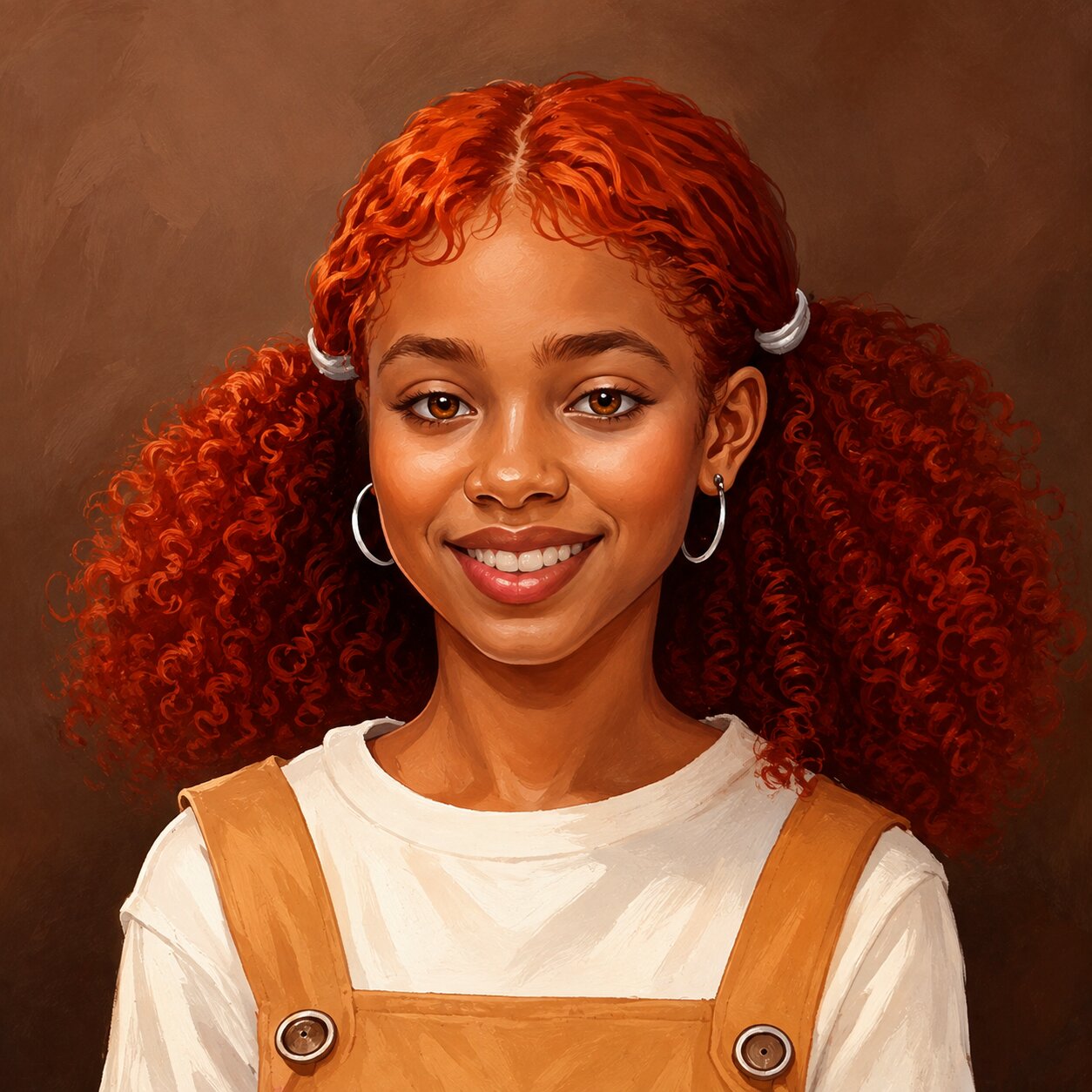
For socialising, Korainian children like Rowmahn and Natalia make friends with those from school and neighbours, and often come together to celebrate birth group birth-day parties. Age mates gather, food is served and each child arrives with a present to contribute to a communal gift exchange. The practice allows every child to give and receive something... although it also creates an excellent opportunity for the Ujian tradition of gossiping gift comparison.
It's all in wholesome childhood fun. Though on occasion it can cause some unwanted friction, just ask Astoria Calcite. However, these celebrations, along with any activity including children, are expected to remain age-appropriate.

Few laws occupy the mind of a Korainian child quite like the Age Appropriate Law. Children hear variations of the same instruction throughout their early and intermediate schooling:
Be age appropriate.
The Age Appropriate Law is a catch-all legislation governing almost every aspect of how children may behave and be treated in Korainian life. It sets out in exhaustive detail what children are permitted to say, how they are expected to act, and how society must interact with them. It is one of the most extensive, complicated and wordy laws of The Mainland, and most Korainians are deeply wary of accidentally breaching it.
Essentially, outside of their own households and kin, many adult Korainians limit interaction with children. With the possibility of a significant fine, the safest conversation with an unrelated child is frequently no conversation at all.
Because adulthood is determined by a Korainian’s fifteenth birth day, one friend may become a legal adult while another remains a child. During this interval, a new-adult may avoid younger Korainians until they have also completed their Adulthood Initiation and Inauguration. Most young Korainians don't fully understand the caution, but some recognise The Age Appropriate Law has something to do with it. Still, being avoided by a friend or sibling that became an adult first is bound to be a little upsetting.
For 60 cycles, the future of the Korainian population was deeply uncertain. Thus, The Government treat procreation, and therefore children, as a protected and essential part of Korainian civilisation. The glow phenomenon identifies Soulmates. Soulmates receive the gift of procreation. Finally, their children replenish and preserve Uji.
Young Korainians grow up hearing this account at home, in school and through Government programming. They are taught that one day they too should seek their Soulmate and contribute to the continued growth of the population. They know that one day sort of soon, the hunt for a Soulmate will begin... but first, they'll need to finish intermediate schooling.
.jpg)

